Whether the temple sustained the forests around it or the forests welcome the temple within them has long been a raging debate. But, it is also true that there are instances where the forests have completely degenerated or disappeared around some of these temples.
I had the opportunity to visit the temple Sorimuthayan with the Atree team who has been working in the KMTR region for quite a while now. The festival that attracts a crowd of whooping 5lakh pilgrims (tourists) for almost a period of 10 days leaves tell-tale signs of post festival debris and other effects that would take the forests a long time to recover from. The festival has been celebrated by the villages that were under the Singampatti Raja for around 150 years now. What was a earlier a crowd of 5000 has now blown out into 5 lakh attendees, with more and more villages adopting Sorimuthayan as their family God. Families camp inside the forests clearing the forest cover to put temporary tents for a period of 10 days bringing along with them food packets wrapped inside plastic bags, and a variety of other items that gets discarded inside the forest.
Saturday, September 18, 2010


Friday, September 3, 2010
SUSTAINABILITY OF THE FARMING PRACTICES, AND MAN-ANIMAL CONFLICT, IN KANI TRIBES OF MUNDANTHURAI PLATEAU
I spent a good amount of a week weaving in and out of Kani Settlements in Mundathurai Tiger Reserve in Tamil Nadu as part of field work and project execution of the 15 day course on Conservation Science conducted by Atree. A project submission together with a Full blown report and Power Point presentation was mandatory to successfully complete the course. Me and Pradeep Kuttava teamed together to make a mini project of finding if Kani Tribe practiced sustainable way of living in the Mundanthurai plateau. We picked up this project since both of us lacked the scientific knowledge to do more prospective projects that directly dealt with environment and species. You can find the report and PPT at these locations.
Tuesday, August 24, 2010
MISTY MOUNTAIN HOP - KUDREMUKH
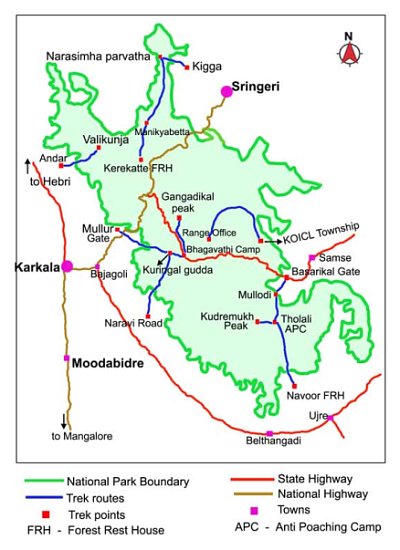
A trekking plan to that took nearly 6 months to to materialize found 10 of us headed from the hustling steaming Bangalore to the cool monsoon blessed land of Kudremukh, The largest protected area of a tropical wet evergreen type in Western ghats.

Friday, June 25, 2010
A THREE SECOND RAINBOW

800ft above sea level nestled between the willowy mountains of Anaimalai, Top Slip presented us a beautiful promise of get-away from the eternal hustle-bustle of the tough Bangalore life.
We planned a 3 day trip starting a Friday night to Pollachi. Vivek, a native of Pollachi and a wildlife enthusiast, arranged all our accommodation through his many contacts and opened us, to a unique opportunity to experience the forests of Top-Slip first hand.
Annaimalais , a chain in the western ghats abruptly stops to open into the plains that surround Pollachi. They form the link in the Nilgiri bio-sphere thus home to the endemic species, the Vulnerable- Nilgiri Langur, Endangered- Lion Tailed Macaque, Malabar Trogon, Sri Lankan Frogmouth etc., that are unique to this habitat.
Tuesday, May 25, 2010
Threats to Melagiri forests
A strong odour of cattle dung hit us even before our eyes caught sight of it littered everywhere like shopping freaks in Bangalore's Mall. And here we were in the middle of a thick scrub jungle come to do a census on the flora and fauna of the Hosur Forests also called as Melagiris. Kenneth Anderson Nature Society together with Asian Nature Conservation Foundation have taken up several surveys in this region that spreads over an area of almost 1200 sq kms containing a mix of several vegetation but mainly abounded by the dry scrub forest to study these forests and restore the region back to its original state.


Thursday, May 13, 2010
A night at Rasimanal Watchtower
The last of the ground survey by KANS winded up at Rasimanal. Here is an account of the most wonderful time of my life..
Rasimanal Forest Guest house is around 2 hours drive from Anchetty. The narrow roads sneak up the hills and at one point gave a awe inspiring view of the valley. Tiny villages with hardly around 100-150 families have sprung up all along the way.
I tasted the most refreshing coffee and tea at a tea shop on the way that boasted a very interesting water heater, though I would say it was simply the lower part of water filter set up on a stove! The swooshing movement of mixing up the beverage with milk and water by the owner was worth filming!
We waited at the last hamlet for the forest guard (who incidentally never turned up) for the guest house keys. When the waiting became intolerable a few of us started walking along the jungle path for birding, a few of the locals began telling me no to go any further as elephants frequented the path beyond the farm. I would have loved to see some. As fate could have its last laugh I was again denied the elephant encounters. The heat of the afternoon gave way to the soothing evening breeze and my troop giving up the hope of the guest house keys collected the rest of the wandering gang and started moving towards RasiManal. Rasimanal belongs to the Anchetty range and here the Cauvery and Dodhalla meet up and continue their way into Tamil Nadu. With the pre-monsoon showers Cauvery had indeed swollen and was gushing away noisily.

Rasimanal Forest Guest house is around 2 hours drive from Anchetty. The narrow roads sneak up the hills and at one point gave a awe inspiring view of the valley. Tiny villages with hardly around 100-150 families have sprung up all along the way.
I tasted the most refreshing coffee and tea at a tea shop on the way that boasted a very interesting water heater, though I would say it was simply the lower part of water filter set up on a stove! The swooshing movement of mixing up the beverage with milk and water by the owner was worth filming!
We waited at the last hamlet for the forest guard (who incidentally never turned up) for the guest house keys. When the waiting became intolerable a few of us started walking along the jungle path for birding, a few of the locals began telling me no to go any further as elephants frequented the path beyond the farm. I would have loved to see some. As fate could have its last laugh I was again denied the elephant encounters. The heat of the afternoon gave way to the soothing evening breeze and my troop giving up the hope of the guest house keys collected the rest of the wandering gang and started moving towards RasiManal. Rasimanal belongs to the Anchetty range and here the Cauvery and Dodhalla meet up and continue their way into Tamil Nadu. With the pre-monsoon showers Cauvery had indeed swollen and was gushing away noisily.

Wildlife Tourism
With the ongoing debate on Tourism people are voicing opinions for and against tourism in the Core Tiger zones. I wholeheartedly agree with the Wildlife enthusiasts that Tourism is not the solution to keep the tigers alive nor do they keep away poachers. And yet you give all the reasons why this must not be done somehow some rich guy will put enough pressure politically or financially and tilt the law to his side. I am not meaning to comment like this as a final act of giving up, No sir! If we can push things and get another few 100 years for the tigers we would keep doing that.
I was thinking just for the sake of finding some solution to this tourism racket for myself. How to keep off the folks who come purely for fun who have no respect for nature and wildlife? How to filter?
And then it struck me why not take away the luxury factor out of the tourism equation in the NPs, Sanctuaries, RF etc.,? After all if they want to experience luxury let them go to the cities and book those 5 stars for heaven's sake! Why do you need 3-4 varieties of food, cozy bed, television, fan, electricity in the jungles? If you have come to experience jungles do it the jungle way! what is the fun after all if you live here like you live it cities? Give them a bed on the ground, just a single toilet and bathroom, plain rice-dal, no electricity and voila! the resulting tourists are the ones that deeply care about the wildlife enough to for-go the modern day comforts to experience wildlife first hand.
Ya, I know Tourism is a booming business and they are the major stakeholders in Indian economy and that their tentacles have reached our core areas, but I hope with all my heart someday we will be able to bring down these resorts and man will be able to experience wild the right way, the forgotten way!
I was thinking just for the sake of finding some solution to this tourism racket for myself. How to keep off the folks who come purely for fun who have no respect for nature and wildlife? How to filter?
And then it struck me why not take away the luxury factor out of the tourism equation in the NPs, Sanctuaries, RF etc.,? After all if they want to experience luxury let them go to the cities and book those 5 stars for heaven's sake! Why do you need 3-4 varieties of food, cozy bed, television, fan, electricity in the jungles? If you have come to experience jungles do it the jungle way! what is the fun after all if you live here like you live it cities? Give them a bed on the ground, just a single toilet and bathroom, plain rice-dal, no electricity and voila! the resulting tourists are the ones that deeply care about the wildlife enough to for-go the modern day comforts to experience wildlife first hand.
Ya, I know Tourism is a booming business and they are the major stakeholders in Indian economy and that their tentacles have reached our core areas, but I hope with all my heart someday we will be able to bring down these resorts and man will be able to experience wild the right way, the forgotten way!
Subscribe to:
Posts (Atom)